
 sales@abaw.ae
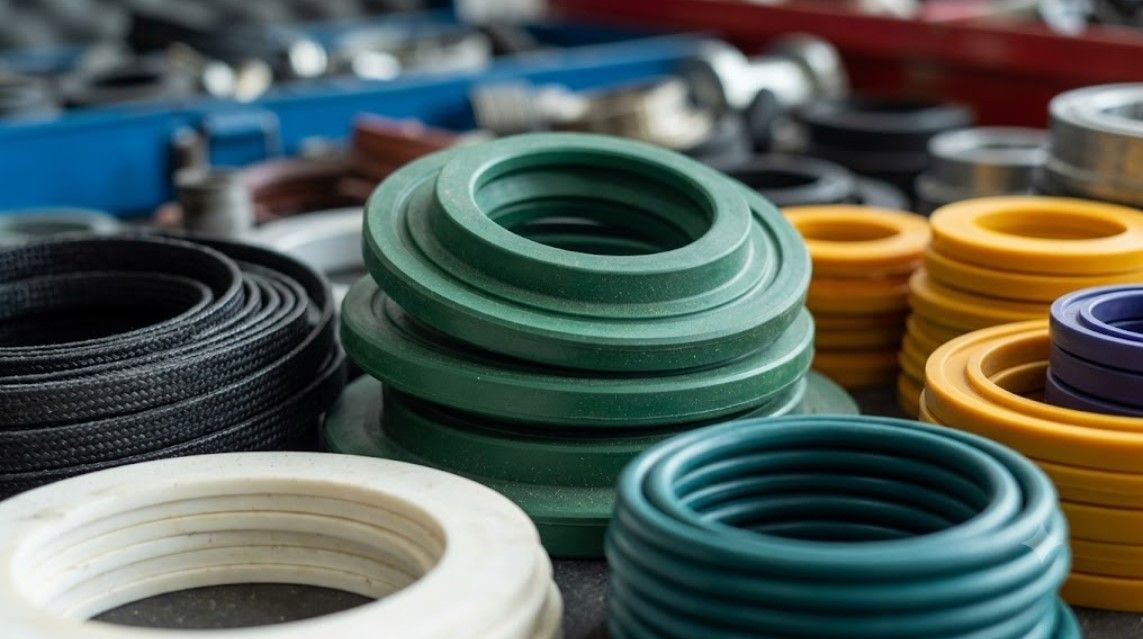
Rubber products are essential across modern industries because they combine flexibility, durability, and resistance to heat, chemicals, and wear. From manufacturing plants and construction sites to healthcare facilities and automotive production, rubber components improve equipment performance, workplace safety, and operational efficiency.
As industries increasingly rely on automation and advanced machinery, the demand for high-quality industrial rubber products continues to grow. Rubber's ability to absorb vibration, create reliable seals, and withstand harsh environments makes it one of the most versatile engineering materials available today.
Understanding how different industries use rubber products helps businesses choose suitable materials, reduce maintenance costs, and extend the lifespan of their equipment.
Why Rubber Is Widely Used Across Industries
Rubber offers a unique combination of mechanical and physical properties that few materials can match. It stretches, compresses, and returns to its original shape while maintaining excellent durability under continuous use.
Both natural and synthetic rubber serve different industrial needs. Natural rubber provides outstanding elasticity and resilience, while synthetic rubber delivers superior resistance to oils, chemicals, heat, weather, and abrasion. This versatility allows manufacturers to produce specialized components for demanding applications.
In addition to improving equipment reliability, rubber helps reduce operational noise, minimize vibration, prevent leaks, and enhance workplace safety.
Automotive Industry
The automotive industry is one of the largest users of rubber products. Every vehicle depends on numerous rubber components to ensure safe and reliable operation.
Rubber is used in tires, hoses, belts, seals, gaskets, O-rings, suspension bushings, weather strips, and engine mounts. These components reduce vibration, prevent fluid leakage, protect engine systems, and improve driving comfort.
Modern electric vehicles also require advanced rubber materials that provide electrical insulation, thermal protection, and noise reduction for battery systems and electronic components.
Construction and Infrastructure
Construction projects rely heavily on rubber products for durability and structural protection. Rubber components perform well under heavy loads, changing weather conditions, moisture, and continuous exposure to sunlight.
Common applications include expansion joints, bridge bearings, waterproof seals, roofing membranes, protective mats, vibration isolation pads, and industrial flooring. Rubber flooring provides excellent slip resistance while reducing worker fatigue in factories and warehouses.
Heavy construction equipment also depends on rubber hoses, hydraulic seals, and protective covers to maintain reliable operation in demanding environments.
Manufacturing and Industrial Equipment
Manufacturing facilities use rubber products throughout production systems to improve efficiency and reduce equipment downtime.
Industrial conveyor belts transport materials efficiently across production lines, while rubber rollers support printing, packaging, textile, and food processing operations. Seals, gaskets, and O-rings prevent leaks in hydraulic and pneumatic systems, helping maintain consistent performance.
Rubber vibration mounts absorb shocks, protect precision machinery, and extend equipment lifespan, making them essential for modern manufacturing plants.
Oil, Gas, and Chemical Industries
The oil, gas, and chemical sectors operate in harsh environments where materials must withstand high pressure, aggressive chemicals, and extreme temperatures.
Specialized synthetic rubber compounds are used in pumps, valves, pipelines, storage tanks, hydraulic systems, and drilling equipment. These components provide reliable sealing, resist chemical degradation, and help prevent costly leaks that could affect safety and productivity.
Healthcare and Medical Applications
Medical-grade rubber plays an important role in healthcare by supporting hygiene, patient safety, and equipment reliability.
Rubber is commonly used in medical gloves, tubing, syringe components, seals, breathing equipment, catheters, and diagnostic devices. Hospitals also install rubber flooring because it offers excellent slip resistance, durability, and easy maintenance in high-traffic areas.
Strict manufacturing standards ensure these rubber products meet healthcare safety requirements.
Food Processing and Marine Industries
Food processing facilities require food-grade rubber products that comply with strict hygiene regulations. Rubber seals, conveyor belts, tubing, and gaskets help maintain sanitary production environments while resisting moisture, cleaning chemicals, and temperature fluctuations.
In the marine industry, rubber protects vessels and offshore equipment from saltwater, humidity, ultraviolet exposure, and mechanical stress. Marine applications include dock bumpers, hatch seals, vibration mounts, hoses, waterproof gaskets, and protective fenders that improve durability and reduce maintenance.
Mining and Electrical Industries
Mining operations require heavy-duty rubber products capable of handling abrasive materials and continuous operation. Rubber liners protect crushers and processing equipment from excessive wear, while conveyor belts and hydraulic hoses support efficient material handling.
The electrical industry also depends on rubber because of its excellent insulating properties. Cable insulation, switchgear components, electrical seals, protective sleeves, and insulating mats help safeguard both workers and sensitive equipment from electrical hazards.
Industrial Safety Applications
Rubber products contribute significantly to workplace safety across various industries.
Anti-slip mats improve traction in wet or oily environments, while protective bumpers and guards help reduce equipment damage and workplace accidents. Rubber is also widely used in personal protective equipment, including gloves, safety boots, and chemical-resistant clothing designed for hazardous environments.
These applications help businesses maintain safer workplaces while supporting compliance with industrial safety standards.
Benefits of Industrial Rubber Products
Industrial rubber products provide several long-term advantages that make them indispensable across multiple sectors.
They absorb vibration, reduce noise, create reliable seals, and resist chemicals, moisture, ozone, ultraviolet exposure, and temperature changes. Their flexibility allows repeated movement without permanent deformation, while their durability reduces maintenance requirements and replacement costs.
Continuous advancements in material science are also producing more sustainable and high-performance rubber compounds that improve energy efficiency and equipment reliability.
Conclusion
Rubber products continue to be a vital part of modern industries, offering the durability, flexibility, and reliability needed to keep operations running efficiently.
Whether used in automotive, construction, manufacturing, healthcare, mining, or marine applications, the right rubber components help improve performance, enhance safety, and reduce long-term maintenance costs.
If you're searching for high-quality industrial rubber products in UAE, Al Burhan Al Wadeh Trading is your trusted partner. We offer a wide range of premium rubber solutions for diverse industrial applications.
Contact ABAW, one of the leading rubber suppliers in UAE, to discuss your requirements and find the right rubber products for your business.
Explore More Expert Insights
Discover Product Guides from Trusted UAE Suppliers: Plan your next project with confidence.
- I Tested 5 Polyurethane Wheels Under Load: Here’s the Results: Real-world performance insights
- How to Choose the Right Rubber Sheet for Your Application: Expert tips for selecting durable and suitable rubber for your project.
- Types of Industrial Rubber Sheets and Applications: A complete guide to rubber sheet varieties and their real-world uses.
- Rubber vs Polyurethane Caster Wheels for UAE Floor Types: Choosing the right wheel material for durability, safety, and performance.
- HDPE vs UHMWPE: Which Plastic Sheet Should You Choose: Choosing the Right Plastic Sheet for Your Needs.