
 sales@abaw.ae
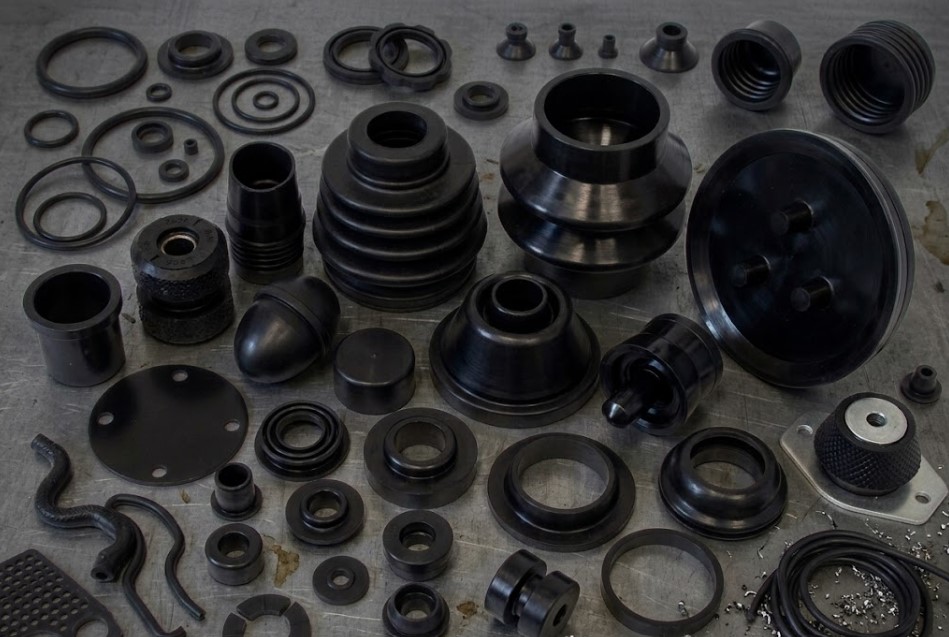
When industrial machinery needs new rubber parts in the UAE, decision-makers face a familiar question: should you invest in OEM rubber components or opt for aftermarket alternatives? The choice affects uptime, safety, maintenance cycles, and total cost of ownership.
Extreme heat, desert dust, coastal humidity, and round-the-clock industrial schedules push rubber to its limits in the UAE. A seal or bushing that performs well elsewhere may fail within months locally. This guide breaks down the real differences and helps you choose with confidence.
Understanding OEM and Aftermarket Rubber Components
Before comparing the two side by side, it helps to understand what each term actually means in real-world industrial use. The labels sound similar, but the engineering, sourcing, and reliability behind them are very different.
What Are OEM Rubber Components?
OEM (Original Equipment Manufacturer) rubber components are produced by, or under direct authorization of, the original equipment maker. They match exact factory specifications, offer verified material composition, full documentation, and manufacturer warranty backing.
What Are Aftermarket Rubber Components?
Aftermarket rubber components are made by third-party companies. They’re designed to fit and function similarly to OEM parts at a lower price. Quality ranges widely, from premium-grade alternatives matching OEM standards to cheap variants that fail prematurely.
Key Differences Between OEM and Aftermarket Rubber Components
 Fit and Compatibility: OEM components provide an exact match, while aftermarket options may vary.
- Compound Quality: OEM parts offer consistent and verified quality, whereas aftermarket quality ranges from premium to poor.
- Lifespan in UAE Heat: OEM products are designed for original operating specifications, while aftermarket durability depends on the brand.
- Cost: OEM components have a higher upfront cost, while aftermarket alternatives are typically 20–60% lower in price.
- Availability: OEM parts may involve longer lead times, whereas aftermarket products are usually readily stocked.
- Warranty: OEM components come with manufacturer-backed warranties, while aftermarket warranty coverage depends on the supplier or brand.
Why the OEM vs Aftermarket Decision Matters More in the UAE
Rubber is a sensitive material. It reacts to heat, UV radiation, chemicals, and mechanical stress in ways that other materials don't. The UAE environment intensifies every one of these factors.
Extreme Temperatures
Summer temperatures regularly exceed 45°C, and surface temperatures on industrial equipment can climb much higher. Low-grade rubber compounds harden, crack, and lose elasticity quickly under these conditions. Premium-grade rubber, whether OEM or quality aftermarket, contains stabilizers and additives engineered to resist heat aging.
Dust and Particulate Exposure
Construction sites, oil and gas facilities, and outdoor manufacturing zones expose rubber components to fine sand and abrasive particles. Cheap rubber wears down faster, leading to leaks in seals, premature belt failure, and contamination of sensitive systems.
Humidity and Coastal Conditions
In coastal cities like Dubai, Abu Dhabi, and Sharjah, salt-laden humidity accelerates the degradation of certain rubber compounds. Choosing the right formulation matters as much as choosing OEM or aftermarket.
Heavy Industrial Use Cycles
UAE industries operate around the clock — logistics hubs, ports, oil and gas, manufacturing plants, and construction sites all run continuous schedules. Equipment downtime is expensive, making reliability a critical factor.
This is why working with established industrial rubber products Dubai specialists becomes essential. The right supplier understands which compounds and grades survive UAE conditions and which don't.
When OEM Rubber Components Are the Right Choice
There are clear situations where OEM is not just preferable but necessary.
Safety-Critical Applications
Rubber components used in braking systems, pressure vessels, sealing assemblies for hazardous fluids, and lifting equipment must meet original safety specifications. A failure here can cause injuries, environmental damage, or major equipment loss.
Precision-Fit Requirements
Some rubber parts require tolerances measured in fractions of a millimeter — hydraulic seals, precision O-rings, and engine vibration mounts, for example. Even slight variations can cause leaks, misalignment, or premature wear of surrounding components.
Warranty Protection
If your equipment is still under warranty, using non-approved parts can void coverage. For new or recently purchased industrial machinery, OEM remains the safest path.
Complex Compound Specifications
Some rubber components use proprietary blends designed for specific chemical resistance, temperature range, or hardness. Generic alternatives may look identical but perform very differently.
When Quality Aftermarket Rubber Components Make Sense
Aftermarket components aren't always second-rate. In many cases, they offer genuine value when chosen carefully.
Non-Critical Wear Items
Rubber bumpers, basic mounting pads, generic hoses, and standard O-rings can often be sourced from quality aftermarket suppliers without performance loss.
Older Equipment
For machinery where OEM parts are discontinued, expensive, or have long lead times, premium aftermarket alternatives keep operations running.
Custom Applications
Modified or specialty equipment sometimes benefits from custom-engineered rubber parts that no OEM produces. Trusted rubber suppliers in UAE can design and fabricate components tailored to specific operating environments — a level of flexibility OEMs rarely offer.
Urgent Replacements
When downtime is costing thousands per hour and the OEM part is days away, a verified aftermarket equivalent may be the smarter business decision.
How to Evaluate Aftermarket Rubber Quality
Not all aftermarket components are created equal. Use these criteria to separate quality manufacturers from low-grade sellers.
Material Specifications
Reputable suppliers provide datasheets showing:
- Compound type (EPDM, NBR, silicone, neoprene, viton, etc.)
- Shore hardness rating
- Operating temperature range
- Chemical compatibility
- Tensile strength and elongation values
If a supplier can't provide these, treat that as a warning sign.
Manufacturing Standards
Look for ISO 9001 certification or equivalent quality management systems. For specialized industries like oil and gas, additional certifications such as API or NORSOK compliance may be required.
Testing and Traceability
Quality manufacturers test batches and maintain traceability records. Ask whether the supplier can document the production batch and provide test results.
Track Record in UAE Conditions
A supplier with years of experience in the UAE market understands local challenges better than a new entrant. Ask for case studies or client references from similar industries.
Common Industries Choosing Between OEM and Aftermarket Rubber in UAE
Rubber components are everywhere in industrial operations. The OEM vs aftermarket decision plays out differently across sectors.
Oil and Gas
This sector deals with extreme pressures, aggressive chemicals, and high temperatures. OEM-spec components are usually mandatory for safety and regulatory compliance, though premium aftermarket alternatives certified to API standards can sometimes be acceptable.
Construction and Heavy Machinery
Excavators, cranes, and concrete mixers use large quantities of rubber components, including tracks, mounts, seals, and hoses. The mix of OEM and aftermarket here depends on the application criticality and equipment age.
Manufacturing and Processing Plants
Conveyor belts, vibration dampers, and gasket assemblies often combine OEM parts in critical zones with quality aftermarket parts elsewhere.
Marine and Port Operations
Salt exposure makes compound selection vital. Specialized marine-grade rubber, whether OEM or aftermarket, must resist corrosion and prolonged moisture exposure.
Automotive Workshops and Fleets
Engine mounts, suspension bushings, and door seals see frequent replacement. Mixing OEM for critical parts with quality aftermarket for cosmetic or non-critical items is common practice.
The True Cost Comparison
A common mistake is comparing only the sticker price. Total cost of ownership tells the real story.
Consider a rubber seal in a critical hydraulic system:
- OEM seal: AED 250, lasts 18 months
- Cheap aftermarket: AED 90, lasts 4 months
- Premium aftermarket: AED 180, lasts 15 months
Factoring in labor, downtime, and replacement frequency, the cheapest part is often the most expensive choice. Quality OEM or premium aftermarket usually wins on long-term value.
Counterfeit Components: A Real Risk in UAE Market
The UAE's position as a global trading hub means counterfeit industrial parts circulate alongside genuine ones. Counterfeit rubber components are often packaged to look like OEM parts but use inferior compounds that fail rapidly.
Red Flags to Watch
- Prices significantly below market average
- Poor or generic packaging
- Missing batch numbers or certifications
- Suppliers unwilling to provide documentation
- Inconsistent surface finish or color
Always purchase from authorized distributors or established suppliers with verifiable reputations.
Making the Right Choice: A Practical Framework
Use this simple decision process when sourcing rubber components for your operations:
- Assess criticality: Is failure a safety, regulatory, or major financial risk? If yes, lean OEM.
- Check warranty status: Is the equipment under manufacturer warranty? If yes, OEM protects coverage.
- Evaluate operating conditions: How extreme are temperature, chemicals, and mechanical stress? Match the compound to the environment.
- Calculate total cost: Compare lifespan and replacement frequency, not just unit price.
- Verify the supplier: Established credentials, technical support, and documentation matter more than the cheapest invoice.
Conclusion:
The OEM vs aftermarket rubber components decision in the UAE isn’t black-and-white. It’s a strategic choice weighing safety, cost, performance, and operational priorities against the unique demands of the local environment. Quality OEM excels in safety-critical applications, while premium aftermarket offers flexibility and savings for the right use cases.
What matters most is matching components to your equipment, conditions, and long-term goals, and partnering with a supplier who understands rubber engineering and UAE industrial realities. For dependable rubber components engineered for UAE conditions, businesses rely on Al Burhan Al Wadeh (ABAW) to deliver durable, application-specific solutions that perform under heat, pressure, and demanding industrial cycles.
Contact our rubber component experts today to source the right components for your equipment and ensure reliable, long-lasting performance with ABAW.
Explore More Expert Insights
Discover Product Guides from Trusted UAE Suppliers: Plan your next project with confidence.
- I Tested 5 Polyurethane Wheels Under Load: Here’s the Results: Real-world performance insights
- How to Choose the Right Rubber Sheet for Your Application: Expert tips for selecting durable and suitable rubber for your project.
- Types of Industrial Rubber Sheets and Applications: A complete guide to rubber sheet varieties and their real-world uses.
- Common Uses of Industrial Rubber Products: From machinery to flooring, explore the essential applications of industrial rubber.
- Rubber vs Polyurethane Caster Wheels for UAE Floor Types: Choosing the right wheel material for durability, safety, and performance.