
 sales@abaw.ae
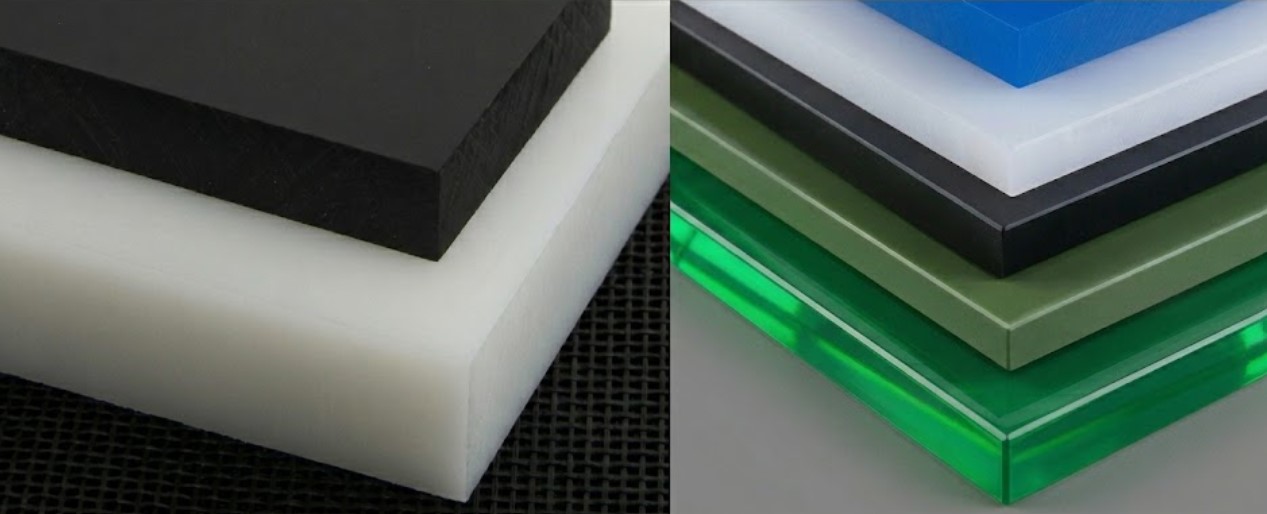
Choosing the wrong plastic sheet does not just waste money. It leads to premature failure, costly replacements, and unplanned downtime.
HDPE and UHMWPE are two of the most widely used engineering plastic sheets in the world. They look similar and share the same polyethylene family. But their performance differences are significant. This guide helps you choose the right one for your project.
What Is a HDPE Sheet?
HDPE (High-Density Polyethylene) is a thermoplastic known for strength, rigidity, and excellent chemical resistance. It is one of the most commonly used high density polyethylene sheets in industrial and commercial applications worldwide.
Key Properties
 Working temperature: -50°C to +80°C
- Good rigidity and dimensional stability
- Excellent chemical and moisture resistance
- Easy to machine, weld, and fabricate
- Cost-effective, recyclable, and widely available
- UV-stabilized grades available for outdoor use
HDPE plastic sheet is ideal for moderate-duty applications where budget, ease of fabrication, and structural stability are the priorities.
What Is UHMWPE Sheet?
UHMWPE (Ultra-High Molecular Weight Polyethylene) has a molecular weight exceeding 3.5 million g/mol. Its ultra-long molecular chains deliver toughness, abrasion resistance, and impact strength that standard HDPE simply cannot match.
Key Properties
- Abrasion resistance up to 10 times better than carbon steel
- Outstanding impact resistance even at very low temperatures
- Very low coefficient of friction with a self-lubricating surface
- Non-toxic, FDA-compliant grades available
- Excellent chemical and UV resistance
- Ideal for high wear plastic sheet applications in heavy industry
UHMWPE is the heavy-duty choice. Where HDPE performs well, UHMWPE excels.
HDPE vs UHMWPE: Quick Comparison
Molecular Weight
- HDPE: 300K–500K g/mol
- UHMWPE: 3.5M+ g/mol
Abrasion Resistance
- HDPE: Good
- UHMWPE: Excellent
Impact Resistance
- HDPE: Good
- UHMWPE: Outstanding
Coefficient of Friction
- HDPE: Low
- UHMWPE: Very Low
Machinability
- HDPE: Excellent
- UHMWPE: Good
Weldability
- HDPE: Excellent
- UHMWPE: Limited
Cost
- HDPE: Lower
- UHMWPE: Higher
FDA Compliance
- HDPE: Yes
- UHMWPE: Yes
Temperature Range
- HDPE: -50°C to +80°C
- UHMWPE: -200°C to +80°C
Best Applications for Each Material
HDPE Sheet Applications
- Chemical storage tanks and vessels
- Food processing equipment and cutting boards
- Marine dock components and boat parts
- Water treatment infrastructure
- Fabricated enclosures and structural panels
- Outdoor furniture and playground equipment
High density polyethylene sheet works best in static or moderately loaded environments where continuous wear is not a factor.
UHMWPE Sheet Applications
- Conveyor wear strips and chain guides
- Bulk material handling liners and chute liners
- Mining and quarrying equipment components
- Star wheels, rollers, gears, and sliding plates
- Marine fender pads and dock bumpers
- Medical device components requiring biocompatibility
Abrasion resistant plastic sheet buyers consistently choose UHMWPE when applications involve continuous motion, repetitive impact, or heavy friction.
Is UHMWPE Worth the Higher Cost?
UHMWPE costs more upfront. For many buyers, that is where the analysis stops and where costly mistakes begin.
Factor in replacement frequency, maintenance costs, and downtime and UHMWPE often delivers a significantly lower total cost of ownership.
A conveyor wear strip in HDPE may need replacing every 6 months under heavy use. The same part in UHMWPE could last 3 to 5 years.
The rule is simple. If wear, friction, or repeated impact is part of the application, invest in UHMWPE. If the application is structural or low-stress, HDPE plastic sheet delivers excellent value.
Machining and Fabrication Differences
HDPE is one of the easiest engineering plastics to machine and fabricate. It welds cleanly using standard thermoplastic welding equipment, making it ideal for polyethylene sheet fabrication including tanks, vessels, and custom enclosures.
UHMWPE requires more care. Its low friction surface causes movement during cutting, requiring proper fixturing. It is best processed using CNC machining, carbide-tipped blades, or waterjet cutting.
UHMWPE cannot be conventionally welded. If your project requires complex fabrication, HDPE is the more practical choice.
Sustainability in 2026
Both materials are recyclable thermoplastics, making them more environmentally responsible than thermoset alternatives.
Recycled HDPE sheets have one of the highest recycling rates of any plastic globally. UHMWPE recycling is more limited but industrial reuse programs are growing.
Both materials replace metal components across many applications, reducing weight, transport emissions, and noise in industrial environments.
Which Plastic Sheet Should You Choose?
Choose HDPE Sheet if:
- Budget and cost control are the priority
- The application is structural, chemical, or outdoor
- You need to weld or fabricate complex shapes
- Wear is present but not continuous or severe
Choose UHMWPE Sheet if:
- The application involves continuous friction, wear, or impact
- Long service life and low maintenance are priorities
- You need self-lubricating properties without external lubricants
- Operating conditions are extreme, high-impact, or highly corrosive
Final Verdict
Both HDPE and UHMWPE are outstanding engineering plastic sheet materials. The mistake most buyers make is choosing on price alone.
Match the material to the actual mechanical demands of your project. You will get the performance, service life, and value your application deserves.
Know exactly what you need? Shop our HDPE Sheets and UHMWPE Sheets online, or contact ABAW with any questions about plastic sheet selection for your project.
You Might Also Find These Helpful
- Picking the right forklift tires for UAE conditions? Read our Forklift Polyurethane Tires: How to Choose the Right Grade for UAE Warehouses.
- Not sure whether to go OEM or aftermarket? Check out OEM or Aftermarket Rubber Parts in UAE.
- Need guidance on wheels for your facility? Explore Caster Wheels: Types, Applications and Benefits.
- Building for automation? Discover Why Polyurethane Material Is Ideal for Robotics and Automation.
- Want real-world performance data? Read I Tested 5 Polyurethane Wheels Under Load.