
 sales@abaw.ae
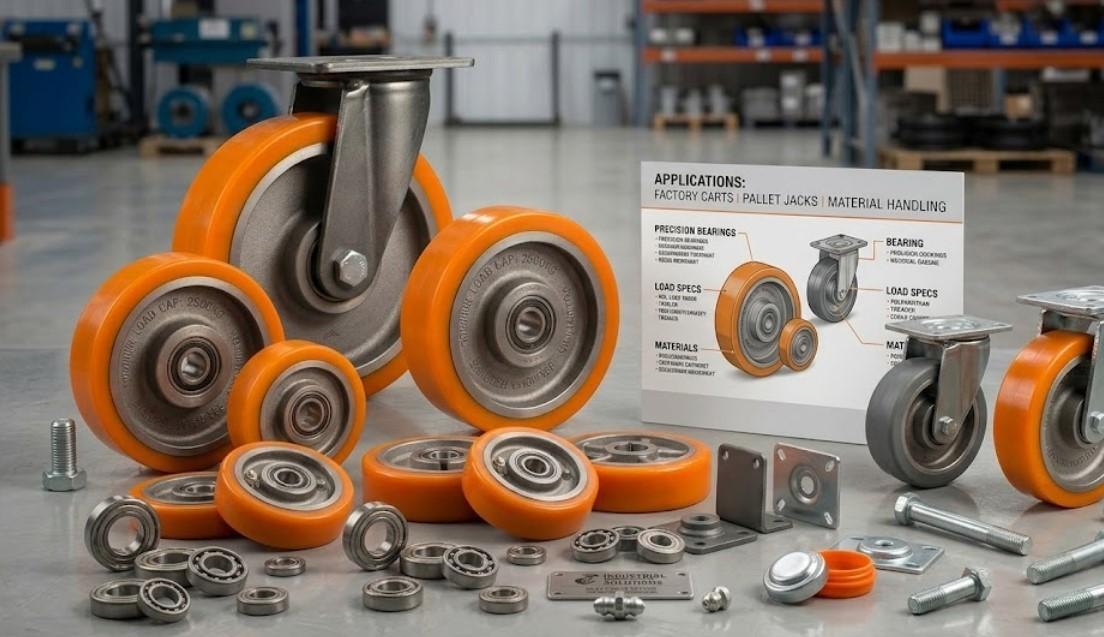
Choosing the right caster wheel can make or break the daily movement of carts, machines and equipment inside a busy facility. Among all the materials available, polyurethane has become the top pick for engineers and facility managers who want strength without damaging their floors.
It is used everywhere from hospital corridors to heavy warehouse racking, and once teams switch to it they rarely go back to rubber or hard plastic.
In this guide we look at why polyurethane wheels have earned that reputation, how they compare with other materials and where they perform best.
What Makes Polyurethane Wheels Different?
Polyurethane is a synthetic material formed by joining organic compounds through strong molecular bonds. This gives it a rare mix of hardness and flexibility that rubber and plastic simply cannot match.
It can be manufactured in different hardness grades, so a wheel can be tuned to be soft and cushioned or hard and load bearing depending on the job. Manufacturers also adjust the tread pattern and core material to fine tune how a wheel handles impact, rolling resistance and long term wear.
Businesses that need a reliable polyurethane products supplier UAE often turn to specialists who understand these grades and can recommend the right one for each application rather than offering a one size fits all wheel.
Key Advantages of Polyurethane Caster Wheels
Polyurethane caster wheels are designed to deliver reliable performance in demanding industrial and commercial environments. Below are the key benefits that make them a preferred choice for heavy-duty material handling and everyday mobility.
Polyurethane caster wheels are designed to deliver reliable performance in demanding industrial and commercial environments. Below are the key benefits that make them a preferred choice for heavy duty material handling and everyday mobility.
1. Higher Load Capacity
Polyurethane wheels carry more weight per wheel than most rubber or plastic alternatives. Many industrial grades support several hundred kilograms on a single caster, which means fewer wheels are needed to move the same load safely.
This is one reason polyurethane is common on forklifts and heavy trolleys. If you want a deeper look at how load ratings work in practice, this guide on forklift polyurethane tires breaks down grade selection for warehouse equipment.
2. Strong and Long Lasting Build
The hardness of polyurethane is usually rated between 85A and 95A on the Shore scale, making it tough enough to resist cracking, chipping and general wear. Wheels built from this material keep their shape even after months of constant rolling across rough or uneven floors, which lowers replacement costs over time.
3. Protects Floors From Damage
Unlike steel or hard nylon wheels, polyurethane will not scratch, dent or leave black marks on flooring. This makes it a favourite in warehouses, hospitals, showrooms and offices where the floor finish matters as much as the equipment being moved. The wheel absorbs the impact instead of transferring it straight into the surface below.
4. Performs Across a Wide Temperature Range
Polyurethane holds its shape and grip in both cold storage areas and warm production floors. It typically handles temperatures from well below freezing up to around eighty degrees Celsius without softening or turning brittle, so the same wheel can be used across different zones of a facility.
5. Resists Oils Chemicals and Moisture
Polyurethane wheels shrug off exposure to oils, greases, solvents and cleaning agents far better than standard rubber. This resistance is why the material is trusted in food processing plants, garages and manufacturing units where spills are common.
Choosing the wrong wheel material is actually one of the most frequent causes of caster failure, something explained well in this breakdown of common caster wheel problems and how to fix them.
6. Smooth Quiet Rolling With Strong Grip
The surface of a polyurethane wheel grips the floor well, reducing slipping on smooth tiles or epoxy coated floors. It also rolls with less noise than metal or hard plastic wheels, which matters in hospitals, hotels and offices where quiet movement is expected.
Polyurethane Compared With Other Wheel Materials
 Polyurethane: High load capacity, smooth rolling, non-marking, and resistant to chemicals.
- Rubber: Quiet and soft on floors, but has a lower load capacity and wears out faster.
- Nylon: Performs well in high temperatures, but is harder on floors and generates more noise.
- Steel: Offers very high load capacity, but can damage floors and is the noisiest option.
Key Takeaway:
- No single wheel material is best in every situation.
- Polyurethane provides the best overall balance of load capacity, floor protection, smooth operation, and chemical resistance.
- This balanced performance makes polyurethane the preferred choice for most mixed-use industrial facilities.
Where Polyurethane Caster Wheels Work Best
Polyurethane wheels are used across a wide range of settings because they balance strength with floor care. Common examples include
- Warehouses and distribution centres moving heavy pallets and carts
- Manufacturing plants where spills and rough flooring are common
- Hospitals and clinics that need quiet non marking movement
- Hotels restaurants and retail spaces with polished or tiled floors
- Workshops and garages exposed to oils and chemicals daily
Picking the correct hardness and tread style for each of these environments is what separates a wheel that lasts for years from one that wears out within months. A quick conversation with a supplier about load, floor type and expected daily usage is usually enough to narrow down the right grade before placing an order.
Conclusion
Polyurethane wheels continue to prove themselves as one of the smartest choices for casters used across industrial commercial and healthcare settings. Their ability to carry heavy loads, protect flooring, resist chemicals and perform across changing temperatures gives them a clear edge over rubber plastic and steel alternatives.
If you are searching for high quality polyurethane products in UAE Al Burhan Al Wadeh Trading is your trusted partner. We offer a wide range of premium polyurethane and caster wheel solutions for diverse industrial applications.
Contact ABAW to explore high-quality polyurethane wheels designed for your load, floor, and operating requirements.
Explore More Expert Insights
Discover Product Guides from Trusted UAE Suppliers: Plan your next project with confidence.
- Best Wheels & Casters for the Medical Industry: Durable, high-performance wheels for healthcare and medical facilities.
- Ultimate Guide to Caster Wheels: Selection and Applications: Smart caster wheel selection for smoother movement performance.
- Polyurethane vs Rubber: What is the Difference?: Understand the key differences between rubber and PU.
- Types of Industrial Rubber Sheets and Applications: A quick guide to industrial rubber sheet types and their practical uses.
- Common Uses of Industrial Rubber Products: Explore the common uses of industrial rubber products effectively.